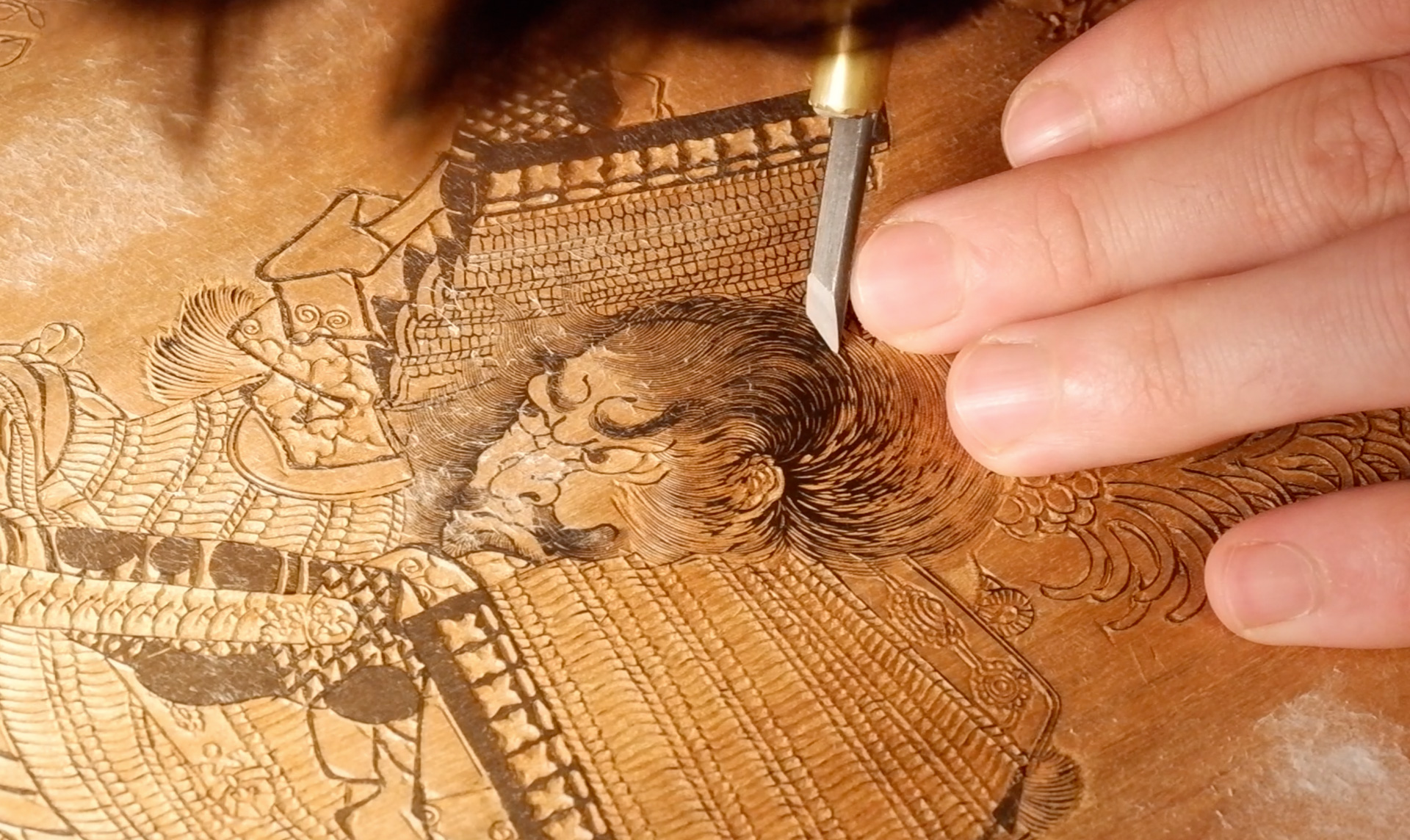
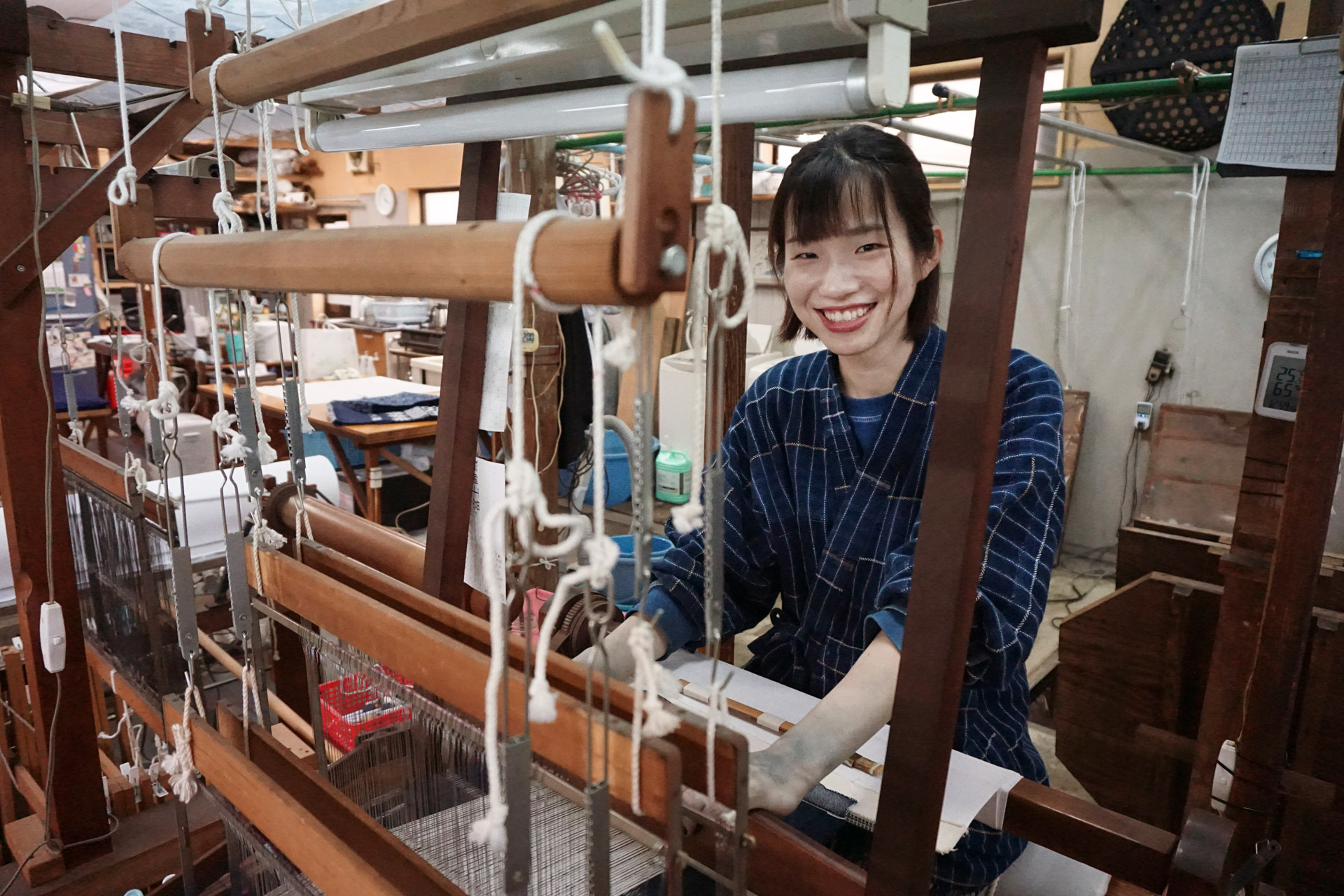
Mako never expected to become a craftsperson, but a desire to protect Japan’s disappearing traditions led her from electrical engineering to an apprenticeship at Mikuriya Senshoku. In Gotemba, Shizuoka, she is learning centuries-old aizome, or Japanese indigo dyeing, alongside weaving techniques that few workshops continue to practice today.
We spoke with her about the realities of apprenticeship, the value of handmade objects, and her hopes for creating a more accessible future for traditional craft.
What is aizome?
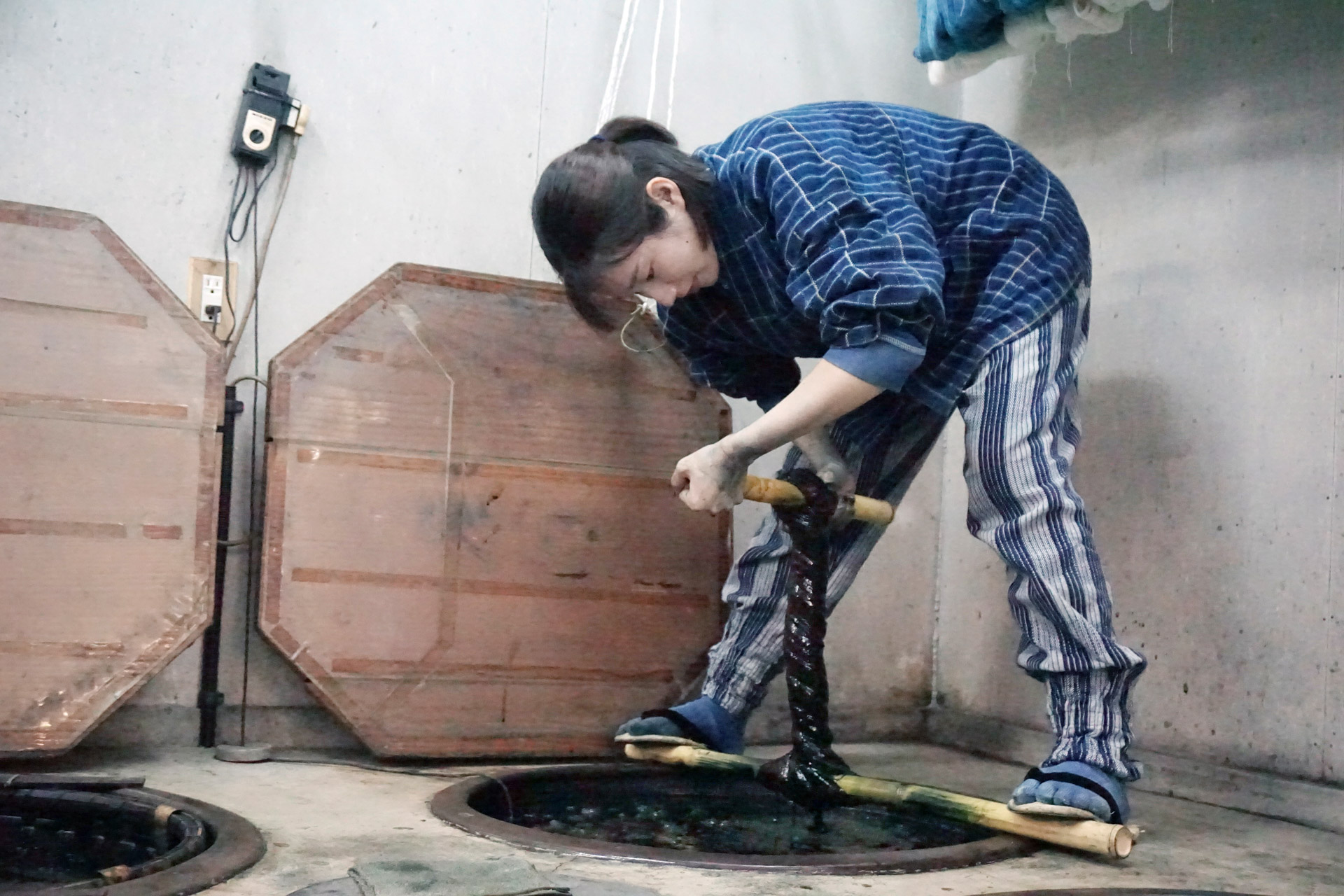
Aizome is the Japanese tradition of indigo dyeing. Its natural dye material, called sukumo, is made by drying and fermenting indigo leaves before using them to prepare a living dye vat.
From Engineering to an Aizome Apprenticeship
You have a background in electrical and electronic engineering, and you gradually made your way into the world of traditional crafts from there. What was the first moment that made you feel you might be able to become a craftsperson yourself?
Actually, until the day I went to ask to become an apprentice, I had never once thought I might be able to become a craftsperson. I hadn't studied design, and there are no craftspeople in my family. I wasn't especially skilled with my hands, nor did I have any better sense for it than other people. Even so, the feelings of "I don't want traditional crafts to disappear" and "I want to become a craftsperson" alone were strong within me. So I thought, even if I were turned down that would be fine (I just wanted someone to hear me out at least once) and I visited the workshop. It was only when my master accepted me as an apprentice that I first truly felt I might be able to become a craftsperson.
Mako’s First Encounter with Indigo Dyeing
What stands out most in your memory from the first time you visited the workshop, or from your first encounter with indigo dyeing?
I wasn't originally interested in indigo dyeing itself; I aimed to become a craftsperson out of a wish not to let Japan's traditional crafts disappear. It was in the course of that pursuit that I encountered Mikuriya Senshoku. What left the strongest impression on me when I first visited the workshop was my master's strong conviction: "I want to pass this technique on to the younger generation." Moved by that passion, I naturally felt, "I want to learn under this person" and that feeling was the biggest reason I decided to become an apprentice.
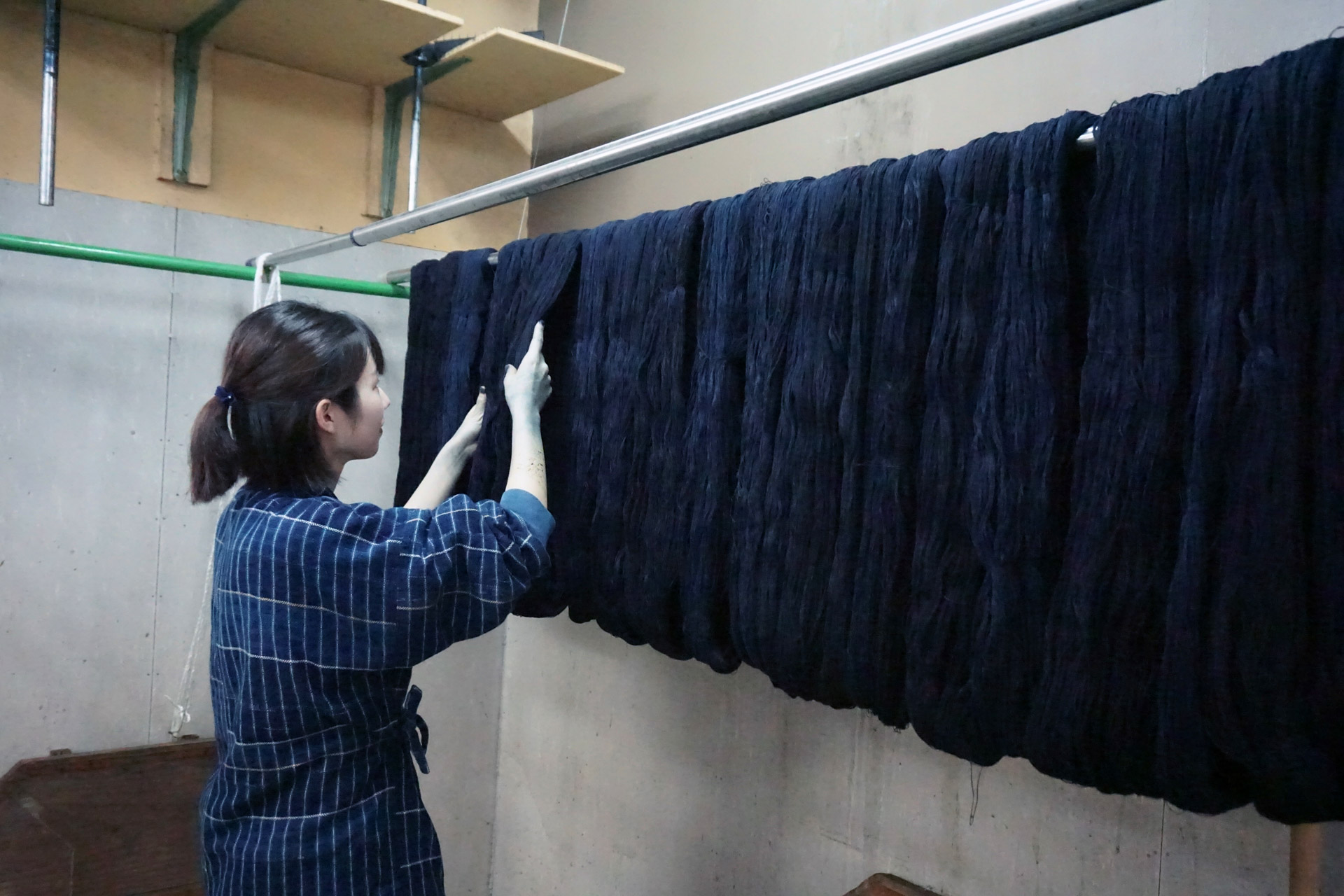
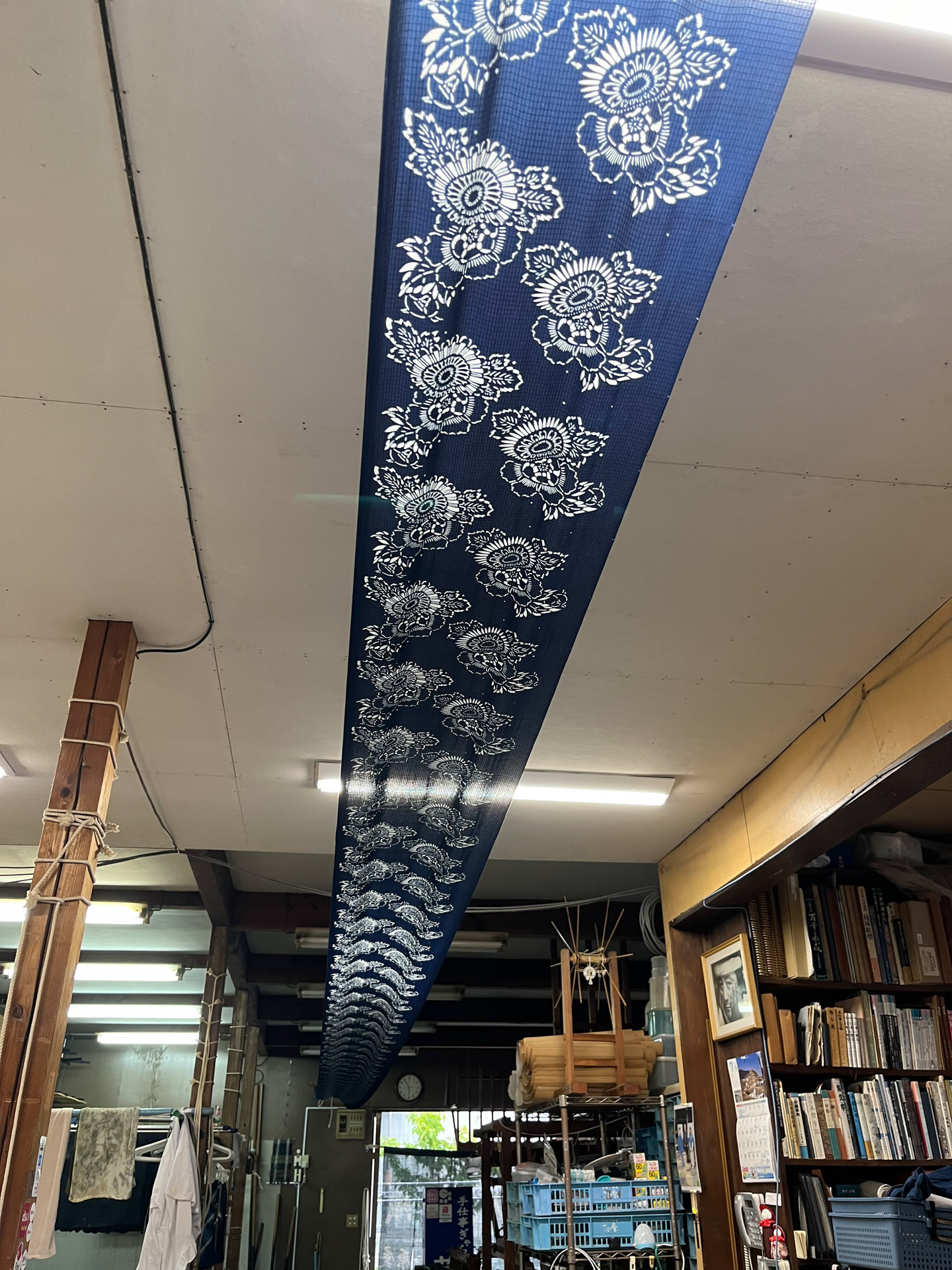
I also witnessed, firsthand, the whole chain of making (dyeing the thread, weaving the fabric on the loom, and that fabric becoming a single garment) and I was moved to realize just how much effort and time goes into the clothes we casually wear every day. Furthermore, the moment when indigo touches the air and turns blue is truly beautiful, as if watching magic, and I still vividly remember how it captured my heart in an instant.
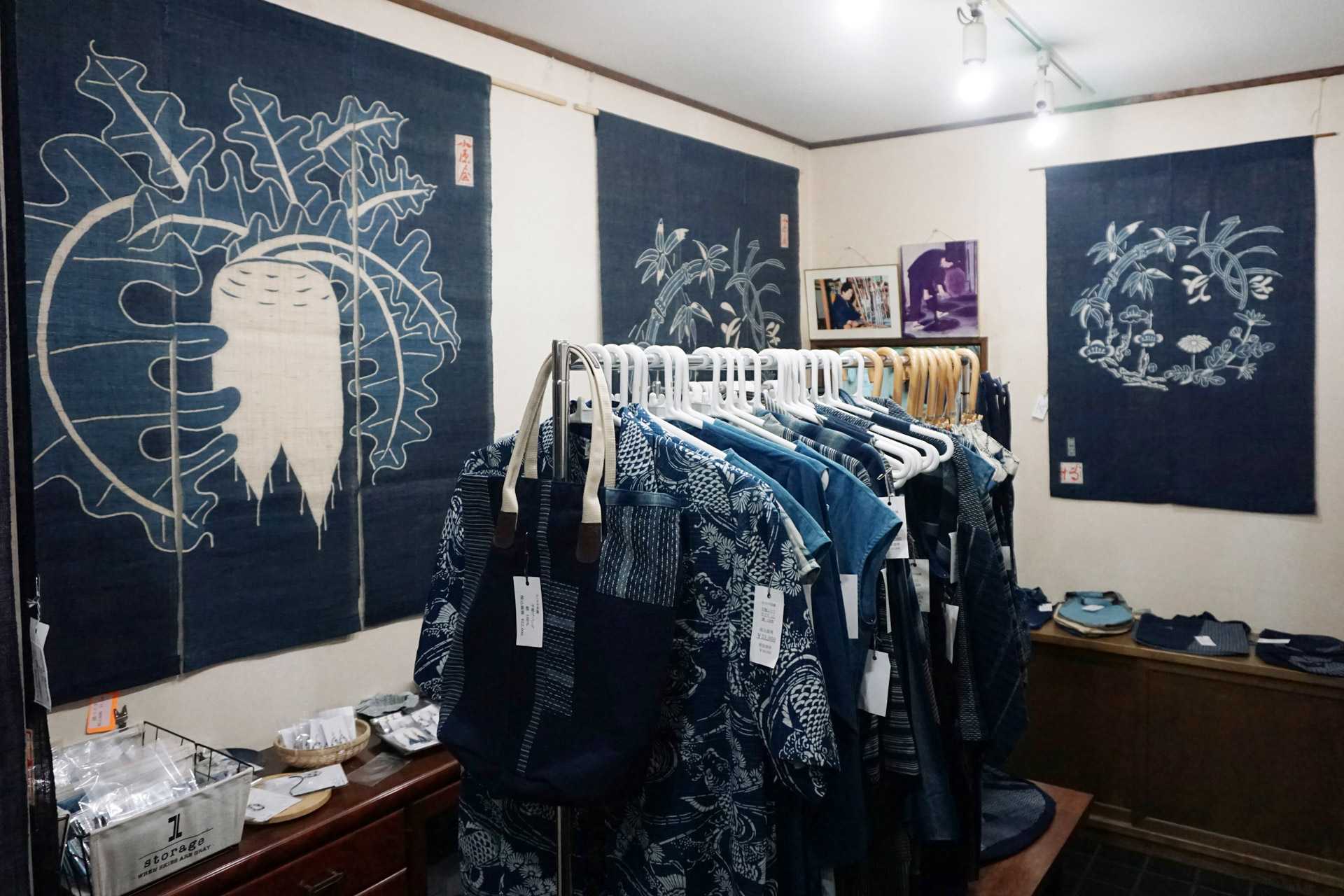
Traditional Indigo Dyeing at Mikuriya Senshoku
For someone learning about Mikuriya Senshoku for the first time, what would you like them to know about the history, process, and regional ties of this traditional craft of Shizuoka Prefecture?
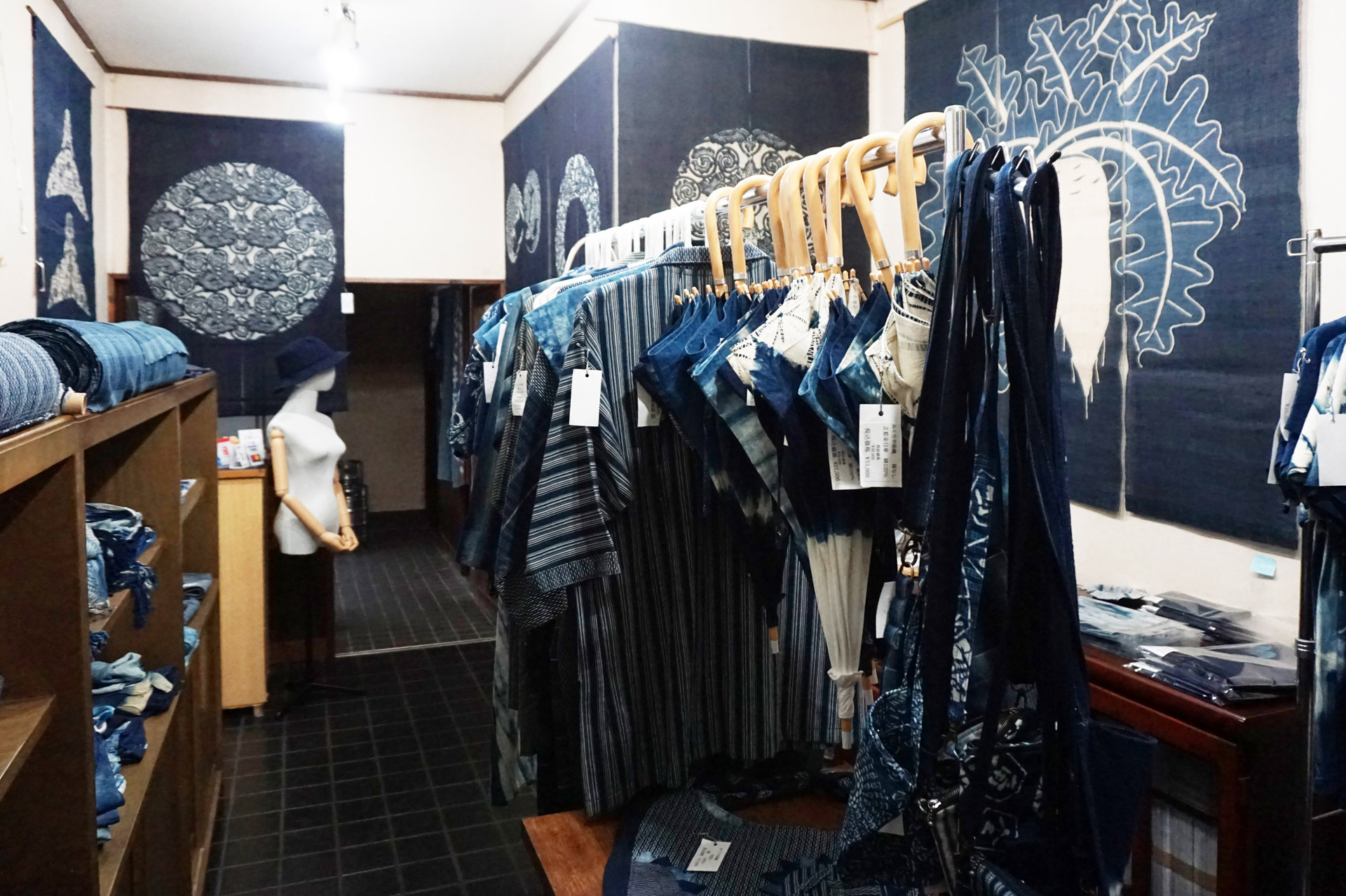
Mikuriya Senshoku dyes using a technique called "ash-lye fermentation-vat dyeing" (aku hakko-date), a method passed down since the Edo period that is made only from naturally derived materials, without chemical agents. A further major feature is that we carry on both "weaving" (dyeing thread and weaving cloth on a loom) and "nagaita chugata-zome," a stencil-dyeing technique also passed down from the Edo period. Both require highly advanced skill and long training, so very few workshops still take them on today. That is precisely why I want as many people as possible to know the beauty and value that only this technique can produce.
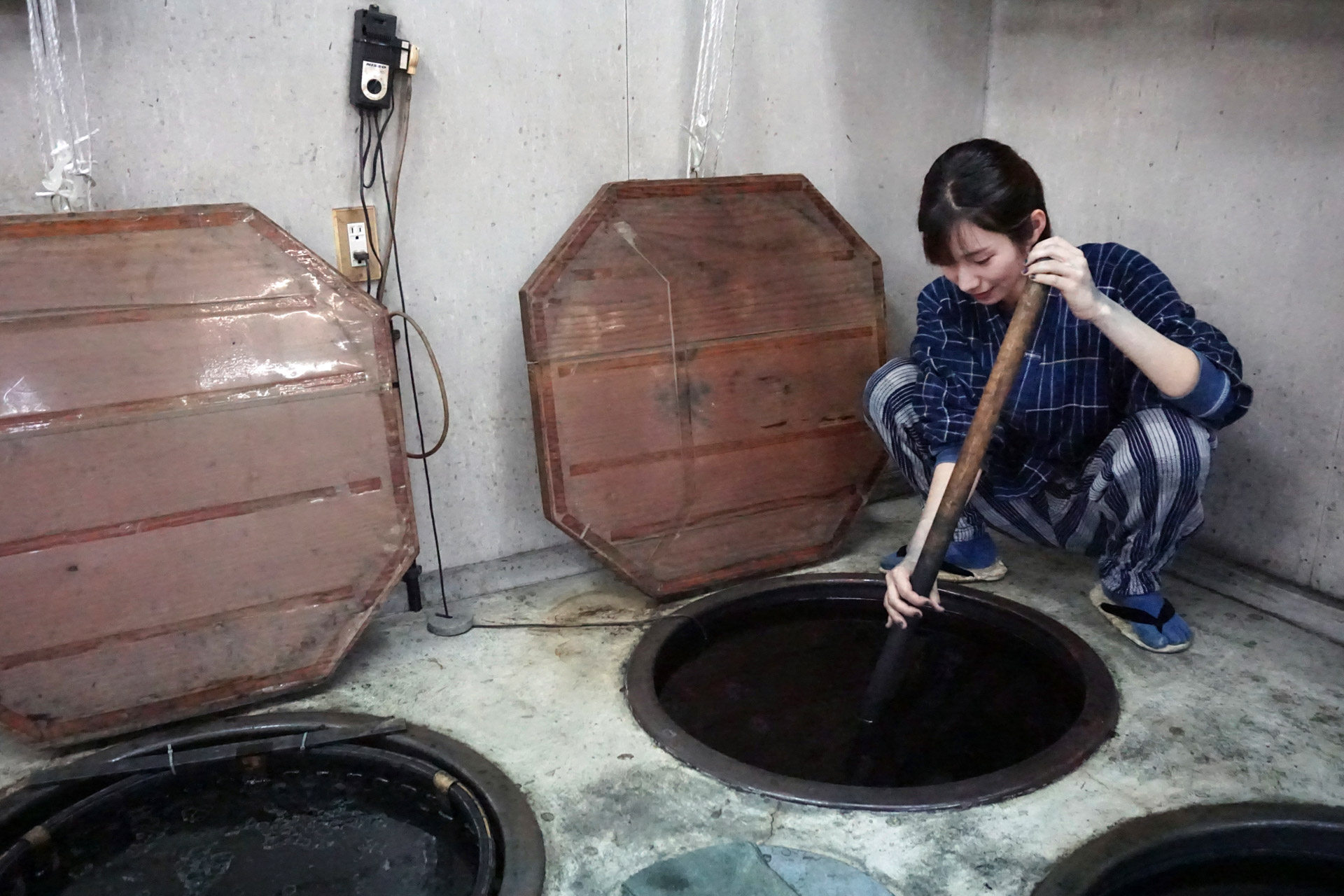
Also, Gotemba, where our workshop is located, once had multiple indigo-dyeing workshops, but now only one remains. For that reason, we are also putting effort into activities such as offering indigo-dyeing experiences to local elementary and high school students, passing the old techniques and culture on to the next generation. I believe that, beyond simply making works, carrying tradition into the future together with the region is also an important role of Mikuriya Senshoku.
Want to learn a traditional craft at home? Discover Online courses for Japanese traditional crafts!
The Reality of Becoming a Craftsperson
What is something about the reality of being a craftsperson that you would like more people to know?
Traditional crafts are a world where it takes many years to acquire the skill. However, making a living during that period of training is by no means easy. Because it is handwork, production takes effort and time, and the price of the pieces tends to run high, so there is also the reality that even good work can be hard to sell. I really want to spend more time on training. But I have to work in order to live. I think that conflict is a challenge many craftspeople carry.
Even so, the reason I can keep going is that acquiring skill, and watching the range of things I can do keep growing, is purely enjoyable. And since becoming a craftsperson, my encounters with people who cheer on and support craft have truly increased. The self I am today exists because so many people have supported me. Without forgetting that gratitude, I want to keep polishing my skills from here on as well.
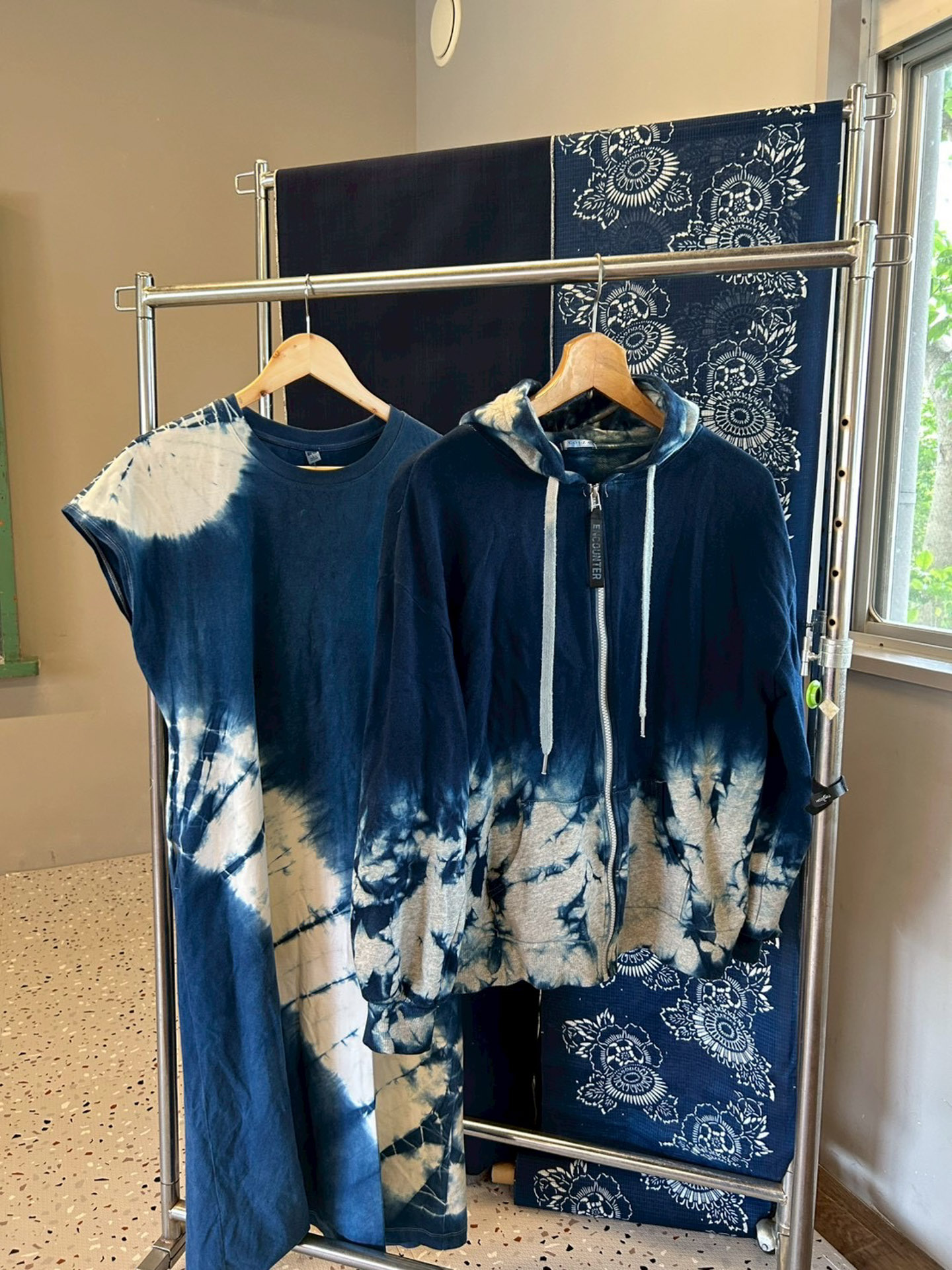
Why Handmade Objects Matter
What do you think people gain by bringing handmade things into daily life?
I feel that bringing handmade things into daily life nurtures a heart that treasures objects, and a richness of heart. We are now in an age of mass production and mass consumption, and it is not uncommon to choose things by price alone. But with a piece a craftsperson has spent time building up starting from the fabric itself, once you know the feelings behind it and then take it in hand, I think you naturally come to want to use it carefully for a long time. Treasuring an object also connects to treasuring the person who made it. That is precisely why I think bringing things made by human hands into daily life gives us a kind of richness that this era, in particular, needs.
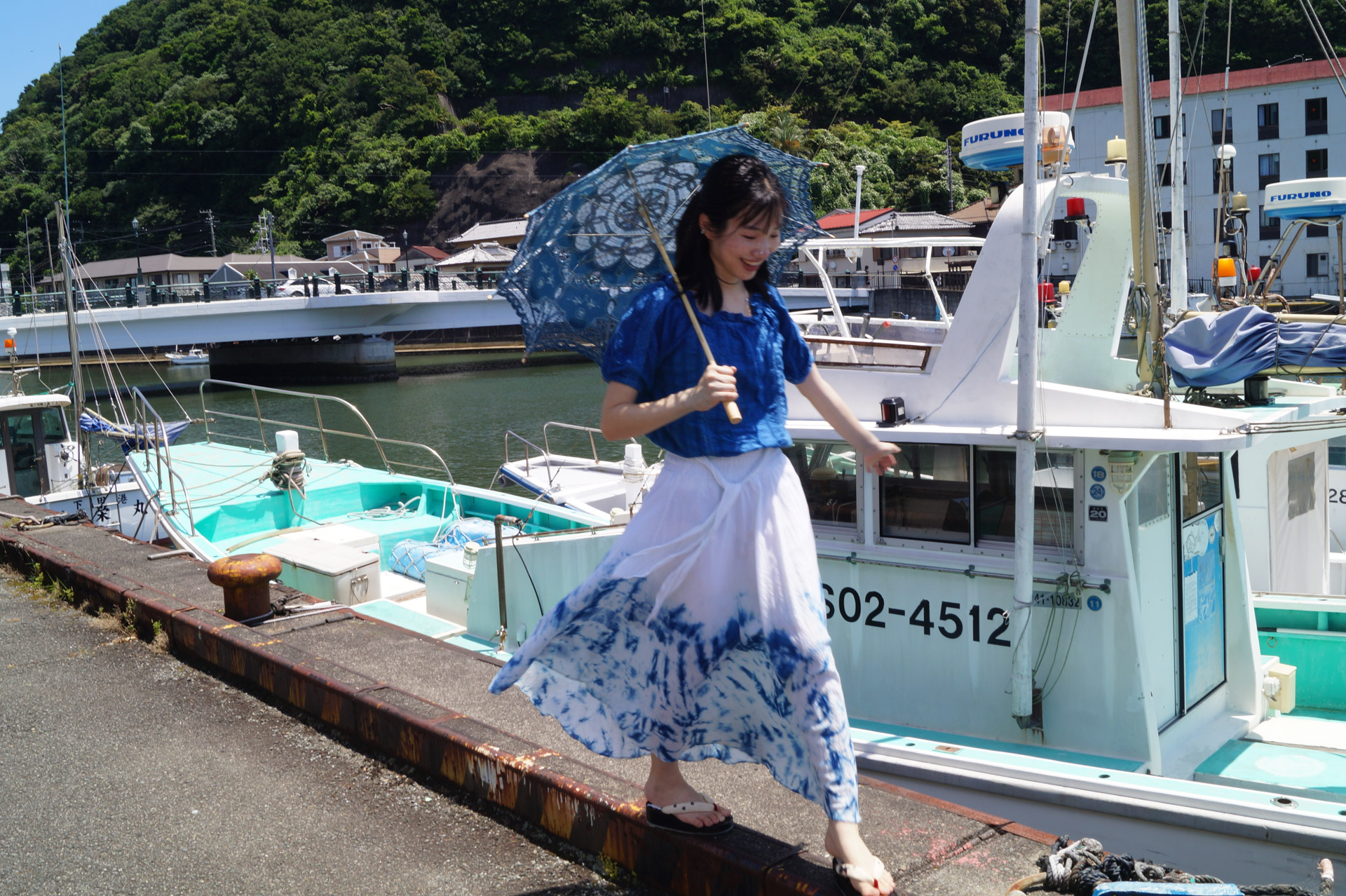
Learning Aizome Through Experience
Among the important things you've learned during your training, what is something that words or a manual alone cannot fully convey?
What I feel through my training is that there really are so many things in traditional crafts that cannot be acquired from a manual alone. In making the indigo liquid, for example, you are dealing with a living thing: fermentation bacteria. You have to judge things while reading that day's condition of the indigo liquid, the temperature, the season, and so on. Dyeing and weaving are the same: even if you follow the same process, as long as it is done by human hands, you can never make exactly the same thing. That kind of sense is something you can only acquire little by little, by piling up experience. That is precisely why it is difficult. But that very depth is what makes traditional crafts fascinating, and it is also the reason I still want to keep learning.
The Vision for Guesthouse Mikuriya
Looking to the future, through "Guesthouse Mikuriya," an experience-based lodging facility that combines indigo dyeing with the workshop, what kind of place do you want to create?
For the future, I want to create a place that lets people feel crafts are more familiar and close to them. Before I became an apprentice, I had the image that "crafts have a high threshold; something only some people get to enjoy." That is exactly why I want to create a place anyone can drop into casually. It's not just an indigo-dyeing experience, but a place where, over the course of a whole day, people can feel the appeal of crafts and the enjoyment of bringing them into daily life. Crafts are not something special, they are something within the everyday. I want to make it a place where people can naturally experience that for themselves.
And by continuing various challenges with that place as a base, and by letting people see me myself living happily as a craftsperson, if I could give a push to the back of someone who thinks, "I want to try becoming a craftsperson too," that would make me very happy.
Creating Pathways into Craft Apprenticeships
What do you think are some of the things that make a person feel they want to become an apprentice? Also, what kind of pathway do you think craft-related communities could build so that more people can think of craft as a future career?
In my case, it was "admiration" that was the trigger. I admired the figure of a craftsperson who carries on tradition through "making," and it was because of that feeling that I was able to jump into this world. Also, I think that if there were more opportunities for people involved in craft, and people who feel anxious, who have interest in craft but wonder, "could I really do it?" to casually talk directly with one another, more people would be able to take that first step.
In fact, I too, at a gathering of people who love craft, once happened to speak with the person who ended up sitting next to me, saying, "I want work that involves craft" and "What I really admire most is being a craftsperson, but I think that's difficult for me, so I'm thinking about whether I could be involved in some other form, like sales or sending out information." At that moment, they said to me, "If you have the feeling that you want to become a craftsperson, then by all means, I'd like you to become one."
For that person it may have been an offhand remark, but for me it was words that gave me a huge push on the back. I think quite a few people are held back from taking that first step by the image that "the world of craftspeople is harsh." That is precisely why I feel there is great meaning in increasing the opportunities for people to connect with one another and actually talk.
And precisely because I am someone who was able to become a craftsperson thanks to the support of fortunate connections, I believe it is important, from here on, to show what it looks like to keep taking on challenges while making a living as a craftsperson. Even among people who admire traditional crafts, I think many cannot take that first step because of the anxiety of wondering, "Can this really work as a job?" That is exactly why I want to keep sending out, myself, what it looks like to keep challenging myself as a craftsperson, and to prove that "a craftsperson's work can truly stand on its own as a livelihood." If, by my becoming that kind of model case myself, even one more person comes to think, "I want to try challenging myself too," that would make me very happy.
How to Support Traditional Crafts
For someone who wants to support traditional crafts but doesn't know where to start, what do you think is the most meaningful first step?
I would really love for people to meet a craftsperson in person and hear what they have to say, even just once. Simply looking at a finished piece is enjoyable enough on its own, but hearing directly about "what kind of feelings went into making it" and "what particular care and attention the maker puts into it" changes how a craft piece looks to you enormously. Craftspeople may have an image of being reticent, but I think many of them feel happy when someone approaches them with interest and starts talking. In fact, I myself have met quite a few chatty craftspeople who, once they start talking, don't stop. Try mustering just a little courage and having a conversation. I believe that kind of encounter becomes a trigger for feeling craft pieces are closer to you, and connects to a first step in supporting traditional crafts.
Try a traditional dyeing workshop in Japan through these available experiences!
You can follow Mako on her Instagram, follow her journey as an apprentice on her blog, and browse her available designs in her online shop.
Want to discuss this article? Check out the "Japan Handmade Forum" on Discord to join the conversation!
Know someone we should interview next? Send us a recommendation at hello@bottlecap.jp
This page may contain affiliate links, and Bottlecap may earn a commission at no extra cost to you.