.jpg.png)
After moving from the Philippines to Japan, Venice Aka discovered pottery during a period of personal loss. What began as a self-taught creative outlet eventually led her to Mashiko, a pottery town in Tochigi Prefecture known for functional ceramics, independent makers, and an open craft community.
In this interview, Venice reflects on finding belonging through clay, learning from local potters, and creating workshops that connect visitors with Mashiko’s materials, people, and traditions.
What is Mashiko pottery?
Mashiko pottery, or Mashiko-yaki, is a ceramic tradition from Mashiko in Tochigi Prefecture. Historically associated with practical household wares, it became closely connected to the mingei folk craft movement, which valued the beauty of useful objects made for everyday life.
From Cabin Crew to a Life Shaped by Clay
You’ve built a life around pottery here in Mashiko, but you’re originally from the Philippines. Could you tell us what first brought you to Japan and how your journey into ceramics began?
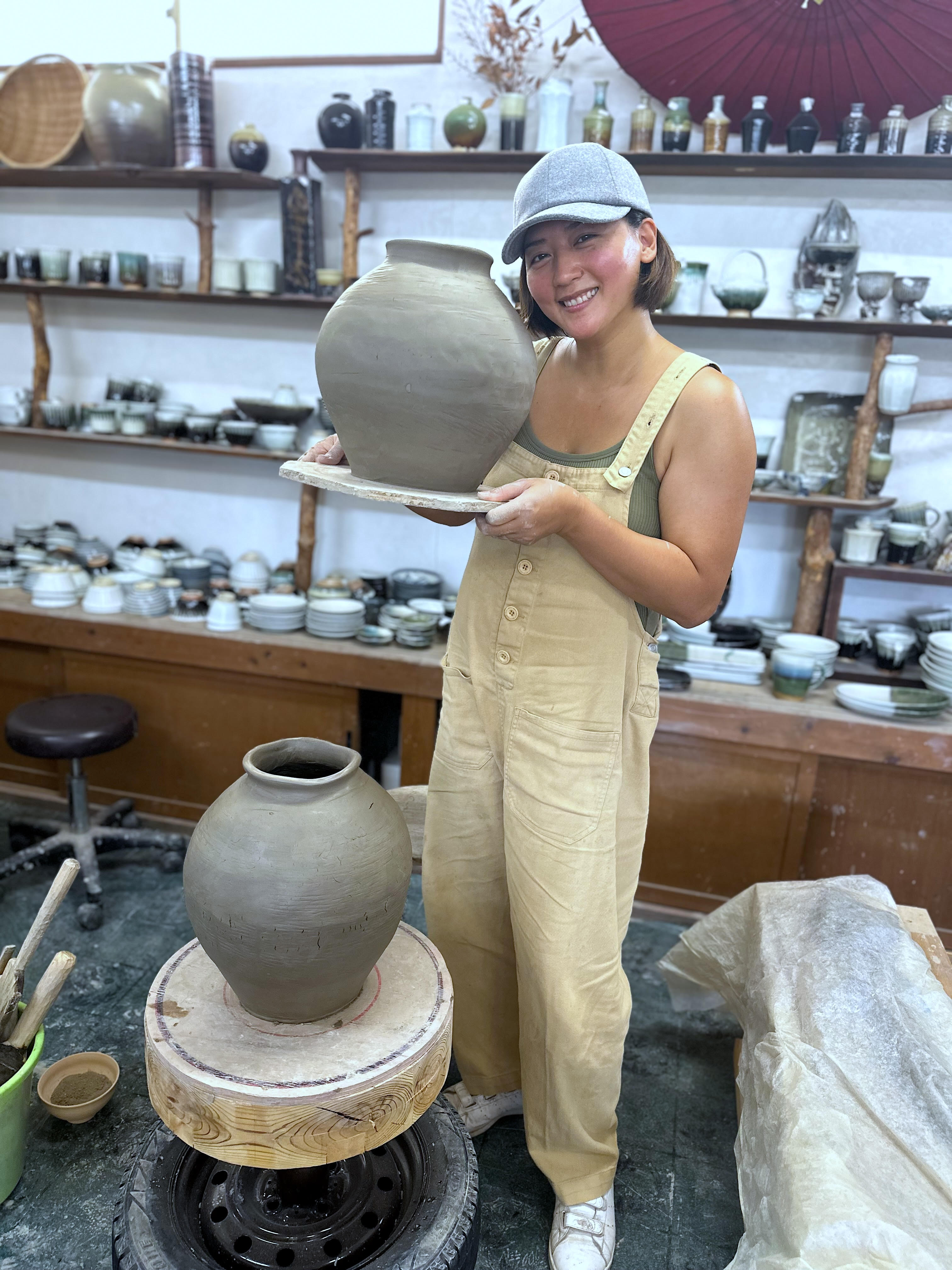
I first came to Japan for a path completely unrelated to pottery. I had been working as cabin crew in the Philippines and later in the UAE. I eventually moved to Japan after getting married into a Japanese family, and over time I settled into a quieter, more grounded life here in Tochigi.
My journey into ceramics began in 2020, during a period of deep grief after losing my mother. Pottery became a way for me to cope and to reconnect with myself. I had no formal training in art or ceramics. Everything started as a personal curiosity. I taught myself through trial, error, and intuition, and along the way I was fortunate to meet generous teachers and local potters who shared their knowledge with me.
What began as a small interest gradually grew into a true passion, and it has since become the center of my daily life and the direction I want to continue building my future toward.
.jpg)
Finding a Home in Mashiko’s Pottery Community
What was your first impression of Mashiko when you arrived? Was there a specific moment when you knew this was where you wanted to build your base?
My first impression of Mashiko was that it was both peaceful and vibrantly alive. The landscape has a grounding quality. The clay-rich soil, the small studios and galleries nestled between rice fields, and the distinct scent of wood firing during festival seasons. There is a quiet rhythm here that immediately draws you in.
The moment I knew I wanted to build my base in Mashiko was when I experienced how approachable and human the pottery culture is. There is a genuine openness in this town, not only toward newcomers but also toward international artists and visitors. In many ways, it feels more welcoming and culturally fluid than anywhere else I’ve been in Japan.
.jpg)
Building Relationships with Local Potters
Mashiko has such a rich pottery heritage, with hundreds of kilns and craftspeople. How did you first connect with the local community and find your place among them?
Connecting with the community came naturally through small encounters. I visited local studios, events, bought clay from neighborhood suppliers, and slowly met potters who were open and kind. I think being sincere, consistent, and respectful helped me find my place. Mashiko’s community is welcoming, especially if they see that you’re serious about the craft. Over time, I began working with local potters, arranging workshops with them, and collaborating in ways that felt meaningful. Those relationships built the foundation of everything I’m doing today.
.jpg)
What Makes Mashiko Pottery Distinctive?
From your perspective, what makes Mashiko pottery special compared to other pottery styles and towns in Japan, both in its materials and its spirit?
Mashiko pottery is special because it is honest. The clay is approachable, forgiving, and full of character; it teaches you to work with what is natural rather than forcing perfection. The spirit of Mashiko pottery is rooted in accessibility. Historically, it supported everyday life through functional wares, and even today, potters here have a strong sense of individuality and freedom. There isn’t a rigid style you must follow. Mashiko encourages personal expression, which is why you see so many unique interpretations of the same material.
Creating Approachable Pottery Workshops in Mashiko
How did Workshops in Mashiko by Venice Aka start? What inspired you to create experiences where visitors and locals could learn pottery side by side?
Workshops in Mashiko started very organically. People would send me DMs on Instagram about pottery lessons or recommendations, and I realized many people were interested in learning but didn’t know where to begin. I wanted to create a bridge; something approachable, personal, and flexible. I also work with local potters whose skills and techniques deserve to be experienced by more people. The workshops became a way to share Mashiko’s rich culture, support the local community, and offer meaningful experiences beyond typical tourism.
The Artists and Traditions Shaping Venice’s Work
When it comes to your own creative work, who or what inspires you most? Are there particular artists, potters, or traditions (Japanese or otherwise) that you study or draw influence from?
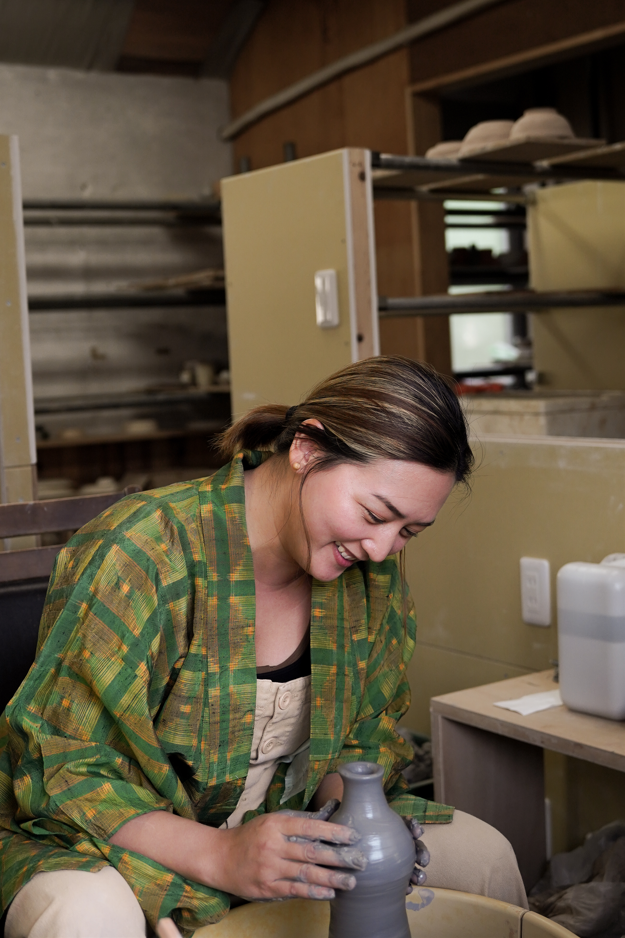
My inspiration comes from texture, material, and the quiet moments in everyday life. I’m especially drawn to black clay, black tenmoku, and surfaces that naturally invite touch; pieces you instinctively want to hold before you even realize it.
While I have a deep respect for Mashiko’s long-standing traditions, my work often follows my own personal aesthetic rather than a strictly traditional style. I’m inspired by potters who create with honesty and intention rather than trends. I’m also influenced by Korean Onggi traditions (thanks to my teacher, Kim Yong Man) along with natural textures and forms that feel both ancient and contemporary, such as the shapes found in Jōmon jars.
I also create sake ware, like sake cups and katakuchi, which reflects both my personal preferences and my appreciation for Japanese culture and its traditions around sharing and enjoying drinks together.
.jpg)
Designing Pottery Experiences for Different Skill Levels
Your workshops attract both beginners and experienced potters. How do you design your programs to make them enjoyable and meaningful for people at different skill levels?
I start by understanding each participant’s goals. Beginners usually need guidance in fundamentals; centering, shaping, and understanding clay. Experienced potters often want to explore new techniques or different clay bodies unique to Mashiko. I work closely with local masters who can offer advanced insights, while I focus on making the environment approachable and supportive. My goal is to create a space where anyone, regardless of experience, can learn at their own pace, feel comfortable, and walk away inspired.
.jpg)
The Future of Pottery in Mashiko
Among the potters and craftspeople you work with, do you sense more optimism or concern about the future of pottery in Japan? What are people in Mashiko feeling right now about where things are headed?
There’s a mix of both optimism and concern. Some potters worry about the decreasing number of young craftspeople, rising material costs, and the challenges of sustaining a handmade lifestyle. At the same time, there is optimism because more international visitors, younger generations, and curious learners are rediscovering ceramic traditions. Mashiko is adapting slowly, but steadily. Many potters feel hopeful that collaborations, workshops, and broader global interest will help keep the spirit alive.
How Beginners Can Experience Pottery in Mashiko
Many foreign visitors dream of learning traditional crafts in Japan but don’t know where to start. What advice would you give someone who wants to experience pottery in a place like Mashiko?
Start simple. Visit studios, walk around the town, and let yourself explore without pressure. Mashiko is welcoming; you don’t need to be an expert to enjoy the craft. I also recommend connecting with workshops or local potters who speak English or are open to beginners. Don’t be afraid to ask questions. And most importantly, come with an open mind. Learning pottery in Mashiko isn’t just a lesson, it’s an experience of place, people, and tradition
.jpg)
Building a More Connected Future for Mashiko Pottery
Looking ahead, what are your hopes for the future of your workshops and for Mashiko’s pottery scene as a whole?
My hope is to continue creating meaningful, small-scale learning experiences; something personal rather than commercial. I want visitors to feel connected not just to the technique, but to the community and history of Mashiko. For the town as a whole, I hope more people (both Japanese and international) will discover the beauty of its craft culture. Mashiko’s pottery scene has so much heart, and I want to contribute to keeping that alive, one student and one handmade piece at a time.
You can follow Venice on her pottery Instagram, and discover Mashiko-based workshop experiences via the Workshop_Mashiko Instagram or their website.
Want to discuss this article? Check out the "Japan Handmade Forum" on Discord to join the conversation!
Know someone we should interview next? Send us a recommendation at hello@bottlecap.jp
This page may contain affiliate links, and Bottlecap may earn a commission at no extra cost to you.