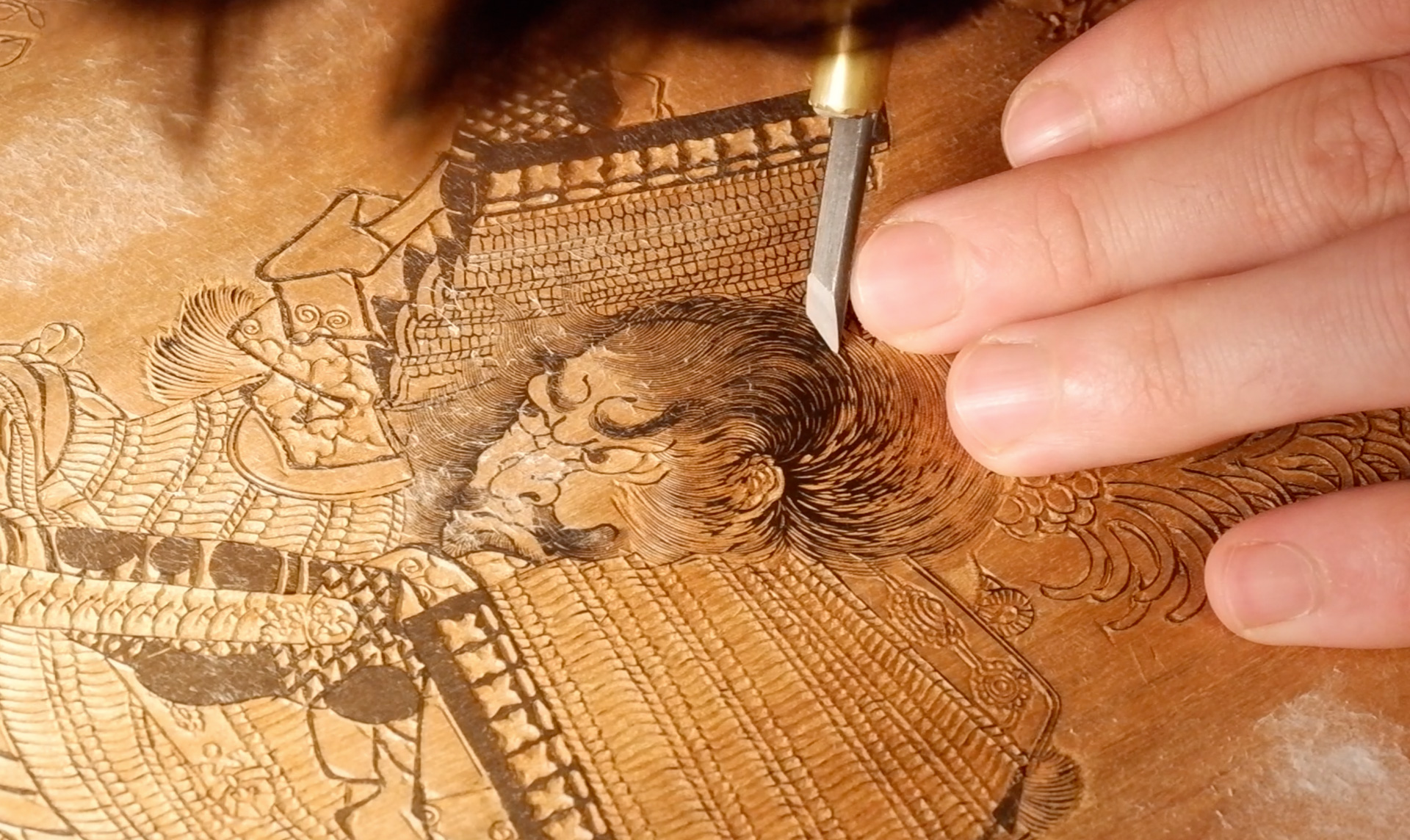
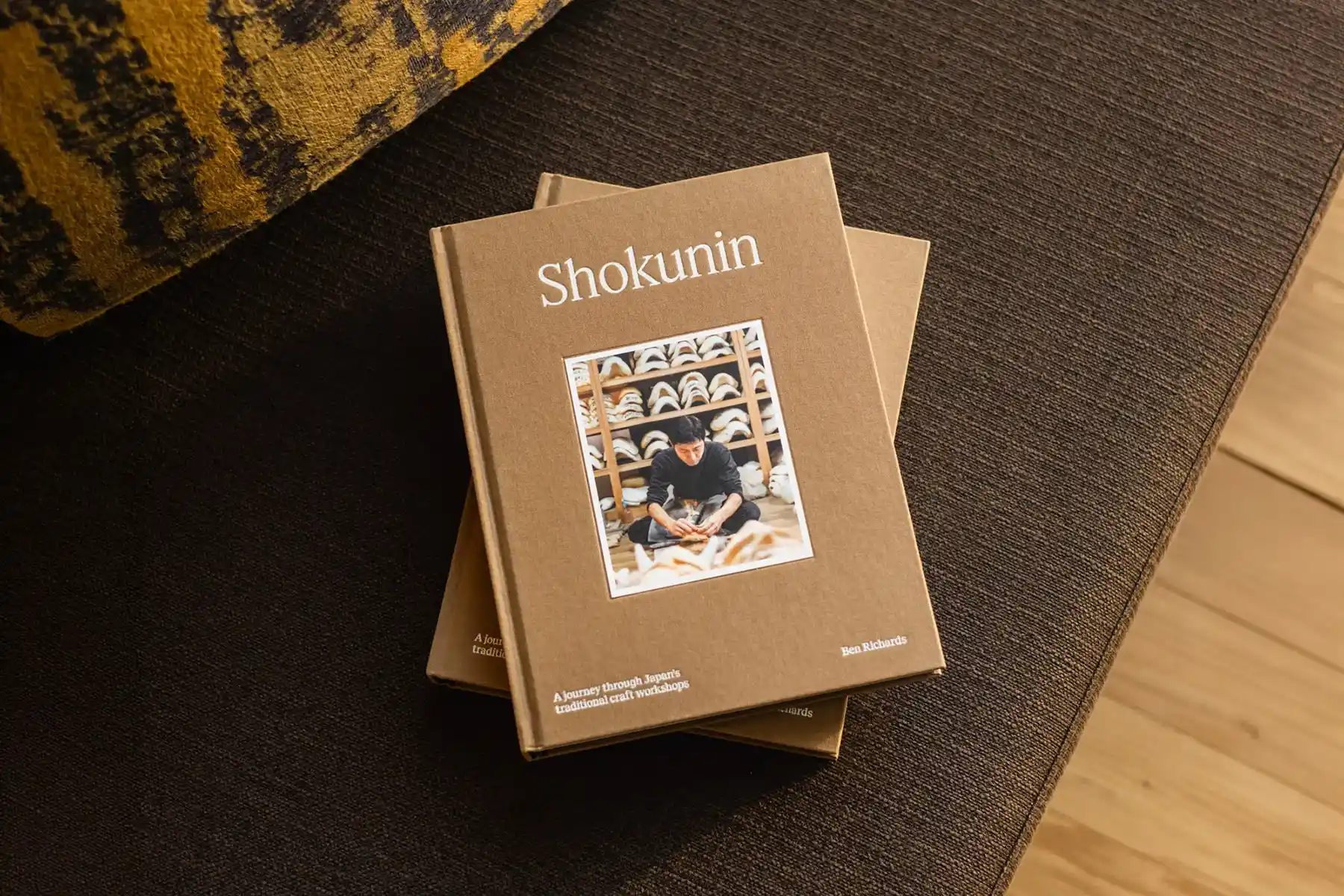
For photographer, designer, and author Ben Richards, understanding Japan begins beyond the standard itinerary. Through Views from Japan and his book Shokunin, he documents artisans, architecture, regional destinations, and the people preserving skills shaped through decades of practice.
In this interview, Ben reflects on how encounters with craftspeople changed his understanding of purpose and mastery, why travelers benefit from looking beyond familiar destinations, and what traditional crafts may need to survive for future generations.
What is a shokunin?
Shokunin is a Japanese word for a skilled craftsperson or artisan. The term can also suggest a deeper commitment to mastery, discipline, responsibility, and respect for the work developed through years of dedicated practice.

From Creative Direction to Photographing Japan
What was your background before coming to Japan?
My background is in graphic design and creative direction. I spent close to a decade working in design studios in London, on global projects that took in everything from art directing photoshoots to working on travel publications. That work gave me an early taste for travel and sharpened my eye for architecture, light, and the way spaces are put together.
When I first visited Japan in 2019, something clicked. I moved there shortly after, and what began as a photography project gradually became something deeper. The architecture pulled me in first, then the craft traditions, and eventually the more remote regions that rarely appear in travel guides. Seven years of travelling the country later, I'm still finding new reasons to go further.

Sharing a Deeper Side of Japan Through Travel
Has your approach to communicating about Japan changed since you first started?
The biggest shift was stepping back from the personal narrative and putting the focus entirely on the destinations, artisans, hotels and remote corners of the country that most standard itineraries never reach. I want what I share to feel genuinely useful for those viewing it.
That became the foundation of Views from Japan. The goal is always to connect people with a side of the country that takes a little more intention to find: countryside ryokan, craft workshops, lesser-travelled regions with a strong sense of local identity. And ideally, that exchange benefits both sides. Travellers get a richer, more considered experience, and the local businesses and makers who sit well outside the tourist trail get a little more of the attention they deserve.

Finding Places Beyond the Standard Itinerary
Did you have like a clear plan when you first considered spending more time in Japan?
I came with an open mind and a genuine curiosity for my surroundings, but no fixed plan. What struck me early on was how difficult it was to find credible, considered recommendations beyond the well-worn itineraries. So I started doing the work myself: reading Japanese magazines, contacting tourism boards, studying regional guidebooks, leaning on local friends for the kind of tips that don't make it online. That research habit never really left me.
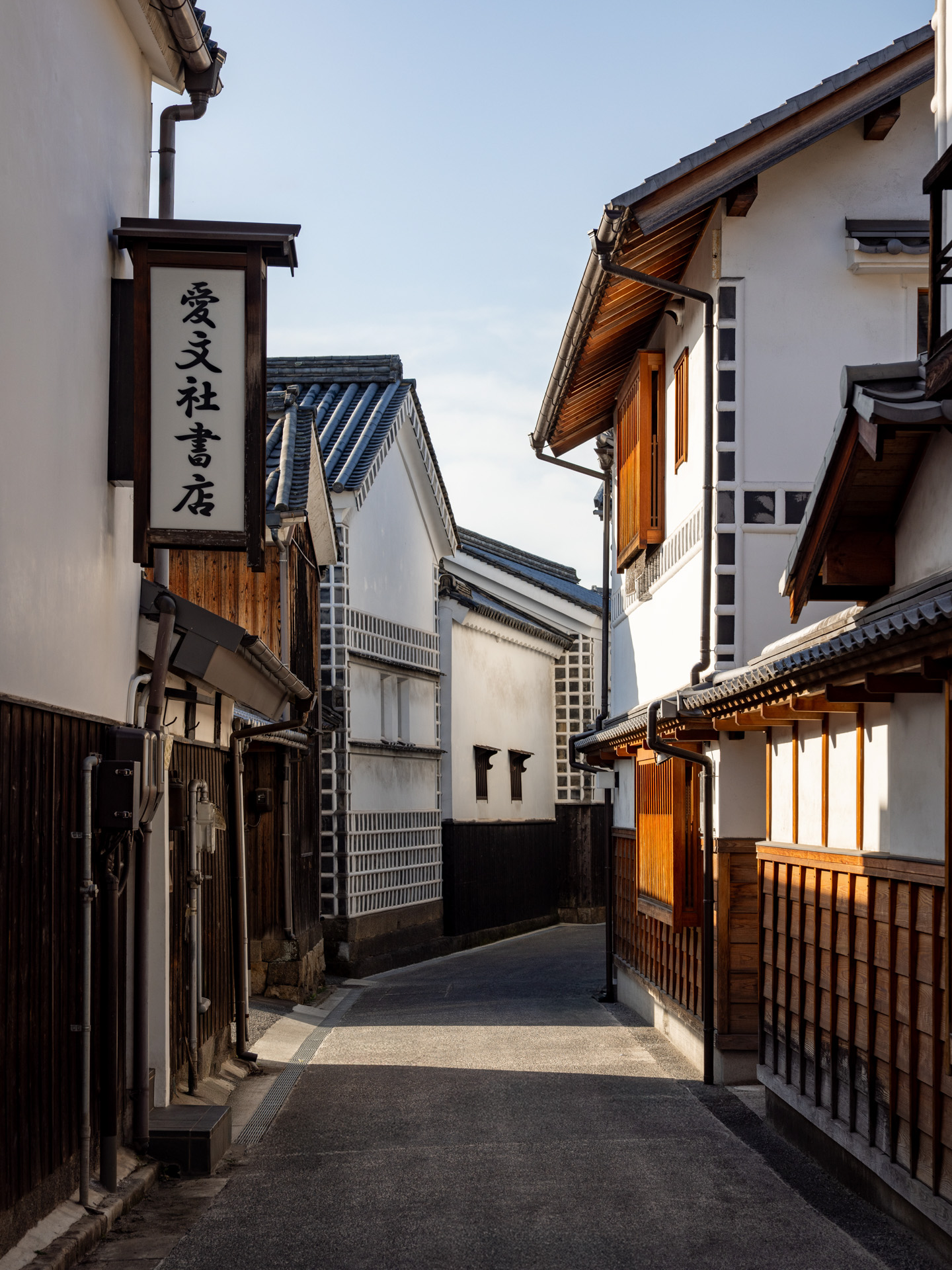
Seven years on, I've travelled across more than 30 prefectures, tried and tested experiences from all corners of the country, and found that the further you go, the more there is to find. Alongside the photography, a client base started to build naturally: magazines first, then hotels and tourism boards, which gave me both the access and the time to go deeper into each destination.
Japan is so fascinating, it has so many layers. The more you uncover, the more you want to keep going deeper and deeper.

The Craft Encounter That Changed Ben’s Direction
Have you had any distinct experiences that felt like they tipped you in your current direction in Japan?
There's definitely been trips that have had a really profound effect on me. For example, one of the first was a trip through Kanazawa, as a craft-focused trip. I went to visit one artisan, Tsunehara Matsuda, who's in the Shokunin book. He's a katana swordsmith, the only master swordsmith actively forging katana in Kanazawa.

I drove out to the countryside to this workshop in the back of his house that's thick with soot, black walls and his furnace. Sparks flying, he's hammering this steel, and I'm learning from him. He's been practicing this craft for over 50 years, and I think that was one of the most influential moments for me.
We live in a world at the moment where we have unlimited choice, right? Unlimited choice, unlimited distraction. Learning from these people, that have been practicing one trade, one skill for 50 years... I felt like the only way I can really do that justice is if I specialize in this as well... in Japan as a whole. The only way to really do this justice is to treat it with the same respect and intention that these Shokunin maintain themselves. That one visit was definitely an eye-opening trip.
How Meeting Japanese Artisans Changed His Perspective
A lot of people have different ideas of what craft artisans in Japan are like. What what your idea of them before you first meet one and saw what they do in person, versus your perception after?
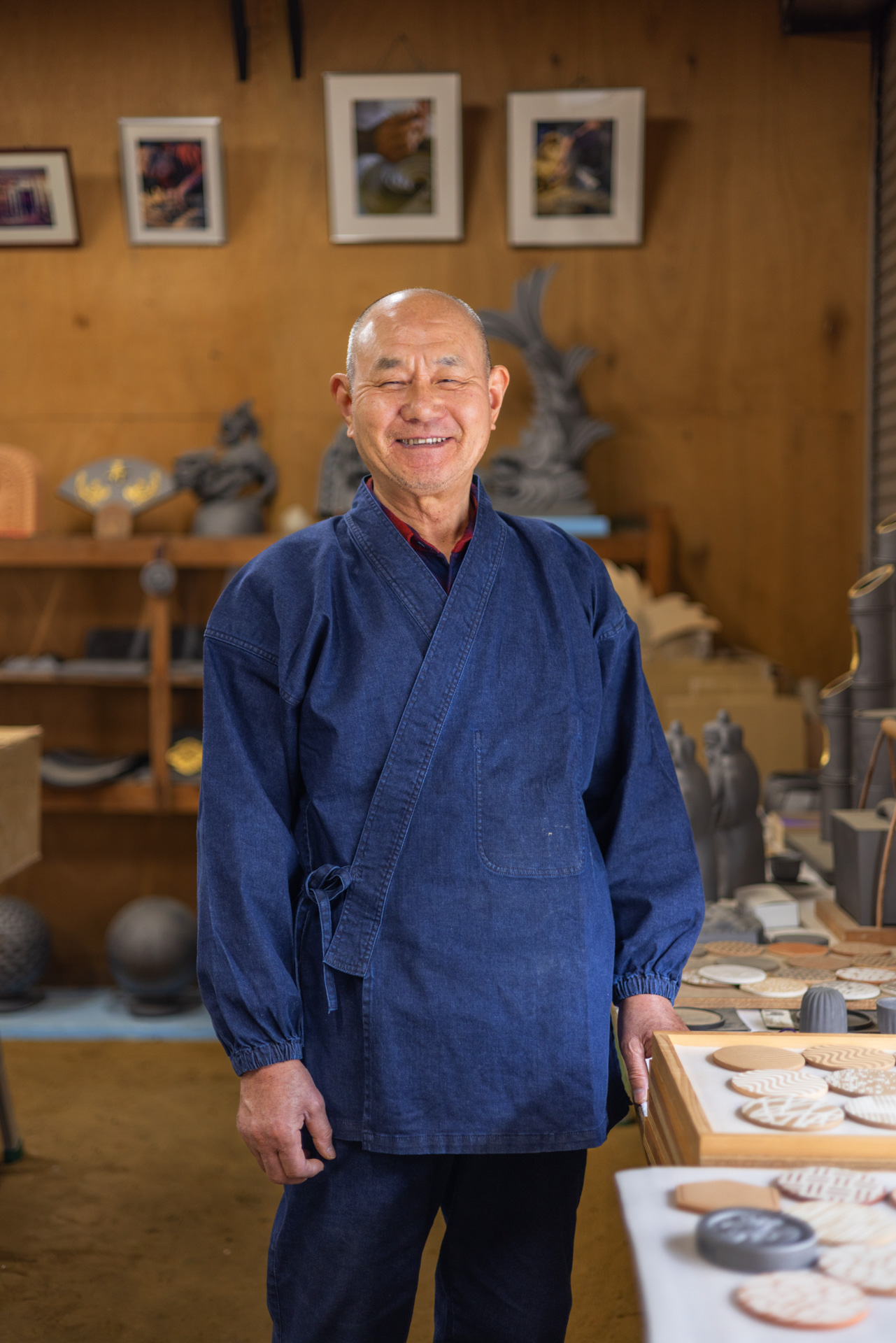
The word that keeps coming back to me is pride. From mask-makers in rural Shimane to indigo dyers in the mountains of Gifu, every workshop I've walked into carries that same quality: a quiet, unshakeable sense of pride and purpose.
Before visiting these studios, I think there's a tendency to romanticise the idea of the Japanese artisan, to project a kind of mystique onto the craft and the craftsperson. What I found was something less theatrical and more grounding. A ceramicist in Fukuoka pulling out photographs of his grandfather at the same wheel. A lacquerware artist in Kanazawa explaining, without any particular drama, that mastery is just repetition. Mundane acts, done with care, over and over again.

In the West we often talk about purpose as though it's something you discover. In the world of Shokunin, it's something you practise. The potters, weavers, bladesmiths and glass workers I've spent time with aren't waiting for inspiration. They arrive, they work, and the work speaks for itself.
From the outside, a workshop tucked into the Japanese countryside can often feel inaccessible. But spend an afternoon in one of these studios and the atmosphere shifts entirely. The craftspeople I've met are warm, generous with their time, and genuinely glad to share what they do. That honesty, that contentment, is something you can't fully understand until you're physically in the room.

How Shokunin View Their Work and Legacy
Do you get the feeling that they're aware of how the rest of the world sees them?
Most craftspeople I've spent time with don't seem particularly concerned with external perception. The focus is inward: the studios and traditions being carried forward. There's a responsibility to what came before that takes precedence over how the work might land on the other side of the world.
It's a striking contrast to the way most of us operate now. So much of what we create and share is shaped, consciously or not, by how it will be received. In the craft studios I visit, that tension doesn't seem to exist. Transistor radios, paper calendars, handwritten notes. Analog in the most literal sense, and there's a real freedom in that.
That quality is part of what draws me back to these studios. In a world built around visibility and validation, spending time with artisans who measure success in entirely different terms has a way of recalibrating things.

Experiencing Japan Through Design, Craft, and Regional Travel
You've built this amazing site, Views from Japan, published a book of the same name, and now the "Shokunin" book as another really great bridge for global audiences to connect more deeply with Japan's artisans. How do the people and places in your books and website differ from what people normally consider when planning to visit Japan?
There's so many niche interests and nuanced parts of Japanese culture. There really is no one-size-fits-all solution. Travelers often resonate with my guides and recommendations, as I share what I'm truly personally passionate in; design, crafts, lesser-known destinations and great places to stay.

I'm trying to create a community of people that have a shared interest and that care about visiting a neighborhood that maybe isn't one of the super mainstream things. People who want to experience Japan through design, or see how locals actually live. I want our community to know what they're on board for, and then I can really double down on providing the most value and for that kind of traveler.

What Traditional Japanese Crafts Need to Survive
Based on everything that you've seen and documented so far, do you feel like there's anything that needs to change in order to support the future of traditional crafts in Japan?
It's something I explored in depth across the artisan profiles in Shokunin, and four themes kept emerging: purpose, form, innovation, and legacy. Together they get to the heart of what keeps a craft tradition alive and what quietly erodes it.
Purpose and form are the foundations. Innovation is where the conversation becomes more nuanced. Some studios are finding ways to reach new audiences without compromising the work itself. An indigo dyeing workshop that now produces tenugui alongside its traditional cloth is still doing exactly what it has always done, just speaking to a wider room. A tile workshop in Kyoto I visited has introduced new moulds to improve efficiency, but the handmade production at its core remains unchanged.

And then there's tourism: opening a studio to visitors, offering a hands-on experience, creating a direct relationship between maker and audience. The craft doesn't have to change at all. The sustainability comes through awareness.
Legacy is the thread I find hardest to set aside. Japan has a system of Living National Treasures, a form of official recognition that carries real weight, but recognition alone doesn't secure continuation. Walking into a workshop where the craftspeople are all well into their later years, with no apprentice and no succession plan, is a particular kind of loss.

Many of these traditions are genuinely at risk. What happens when the last swordsmith in a village puts down his hammer, or when a woodcarver passes on with no one to follow? That question sat with me throughout the making of this book. In the end, what I came to understand is simple: the work of a Shokunin is never really finished. And perhaps that is precisely the point.
Is there an apprentice? Someone to pass this on to afterwards? It could just be bringing in a new person that's maybe outside of the family, or is a foreigner. It's sad when you go to a workshop and there's four people working, they're all in the nineties, and there's no one to pass this down to because the door will just close and that'll be that. And that's happening all across Japan. So, I think for artisans, it's crucial actually - being open to adaptation.

You can follow Ben's work via Views from Japan on their Instagram, learn more on their website, and get a copy of Shokunin on his Shop page.
Want to discuss this article? Check out the "Japan Handmade Forum" on Discord to join the conversation!
Know someone we should interview next? Send us a recommendation at hello@bottlecap.jp
This page may contain affiliate links, and Bottlecap may earn a commission at no extra cost to you.